
Buying Guides / The notebook
Read Supplement Labels Before Choosing a Bottle
Compare serving sizes, ingredient amounts and quality documentation, then prepare the questions that matter for your pharmacist or clinician.
By Anti-Aging · Published
We may earn a commission from qualifying purchases. Affiliate disclosure
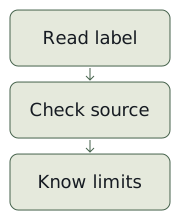
Start with the decision, not the bottle
Write down why you are considering a supplement before comparing products. “I want to discuss a possible nutrient shortfall” is a different task from “this bottle promises healthy aging.” A label can help identify a product; it cannot settle whether taking it is the right choice for you.
Bring that question to a pharmacist, registered dietitian or clinician with your current medicines and supplements. FDA advises discussing benefits and risks before use: supplements can interact with medicines, affect laboratory tests and create problems around surgery. They are not substitutes for prescribed treatment or a varied diet. FDA supplement guidance.
Put two labels on the same basis
Use the Supplement Facts panel rather than the front-of-bottle number. NIH ODS identifies serving size, ingredient quantities and established Daily Values as key label information. For a proprietary blend, the total blend amount does not necessarily tell you the amount of each component. ODS label information.
Build a small comparison card:
- Exact product name and form, including powder, tablet or softgel.
- Serving size and number of servings in the container.
- Ingredient name, amount and unit per serving.
- Directions, other ingredients and the questions you still need answered.
- Current price of that exact size, not a different pack shown nearby.
Keep units visible. Do not silently replace micrograms with milligrams or compare one capsule with a multi-capsule serving.
An illustrative price comparison
Suppose fictional Bottle A costs $18 and contains 60 capsules, with two capsules per labeled serving. It contains 30 labeled servings, costing $0.60 each. Fictional Bottle B costs $20 for 40 one-capsule servings, costing $0.50 each. Bottle A has the lower checkout price but not the lower price per labeled serving.
That arithmetic is not a recommendation to take either serving. It also does not establish equal ingredient amounts, absorption, benefits or suitability. Compare the ingredient lines separately, and do not invent a personal dose to make the price comparison work.
Ask what a quality claim actually covers
NIH ODS explains that independent quality seals can address manufacturing, ingredient identity and contaminants; they do not establish that a supplement is effective or appropriate for a particular person. ODS consumer overview.
For your own buying record, save the exact product name alongside the issuer and scope of any documentation. A report naming another formula or an unidentified batch leaves a different question from a document that clearly names the item in front of you. Ask the maker or issuer to clarify the connection instead of extending a logo to every product bearing the brand name.
Prepare a useful conversation
Take photographs of the front label, Supplement Facts and other ingredients. List what you already take, why you take it and any planned procedure. Ask whether there is a reason to use the ingredient, whether an interaction or test issue matters, and how any proposed use would be reviewed.
If those questions remain unresolved, waiting is a valid purchase decision. This guide is a label-reading aid, not a diagnosis, treatment plan or individualized supplement recommendation.
Further reading
Check the exact source and product details when you spot a discrepancy.